

⚡ TL;DR: This guide offers six practical tips for Jersey City homeowners on asphalt shingle roof installation, from wind-resistant shingles to proper nailing for lasting protection.
📋 What You’ll Learn
In this Jersey City guide to asphalt shingle mastery, homeowners will learn six vital tips for storm-proof roofs, expert hires, flawless prep, leak defense, pro techniques, and real triumphs.
- Select wind-resistant shingles built for Jersey City storms to shield your home from gales, debris, and harsh weather for decades of reliable protection.
- Vet roofers for expertise by reviewing credentials, local references, and warranties to secure top-tier asphalt shingle installation without costly errors or redo's.
- Prepare your roof deck meticulously for a sturdy base that stops warping, gaps, and early shingle wear in humid coastal conditions.
- Install premium underlayment and flashing systems to block leaks effectively, boosting roof longevity amid Jersey City's frequent rains and winds.
- Master nailing and ventilation patterns for high-wind zones, locking shingles tight while promoting airflow to prevent ice dams and rot.
📖 Reading time: 7 min
✍️ Author expertise: Jersey City roofer with 15 years of asphalt shingle installs from local storm repairs.
Ever wake up to a puddle in your Jersey City kitchen after a Hudson County storm? That's the nightmare when your asphalt shingles buckle under wind-whipped rain and ice dams.
Most homeowners grab the first roofer they find, only to regret it when leaks sprout like weeds six months later. But what if you knew the insider tricks to nail asphalt shingle roof installation right the first time?
These six battle-tested tips from Jersey City pros will arm you against shoddy work and surprise costs. Ready to master your roof?
Tip #1: Choose Wind-Resistant Asphalt Shingles for Jersey City Storms
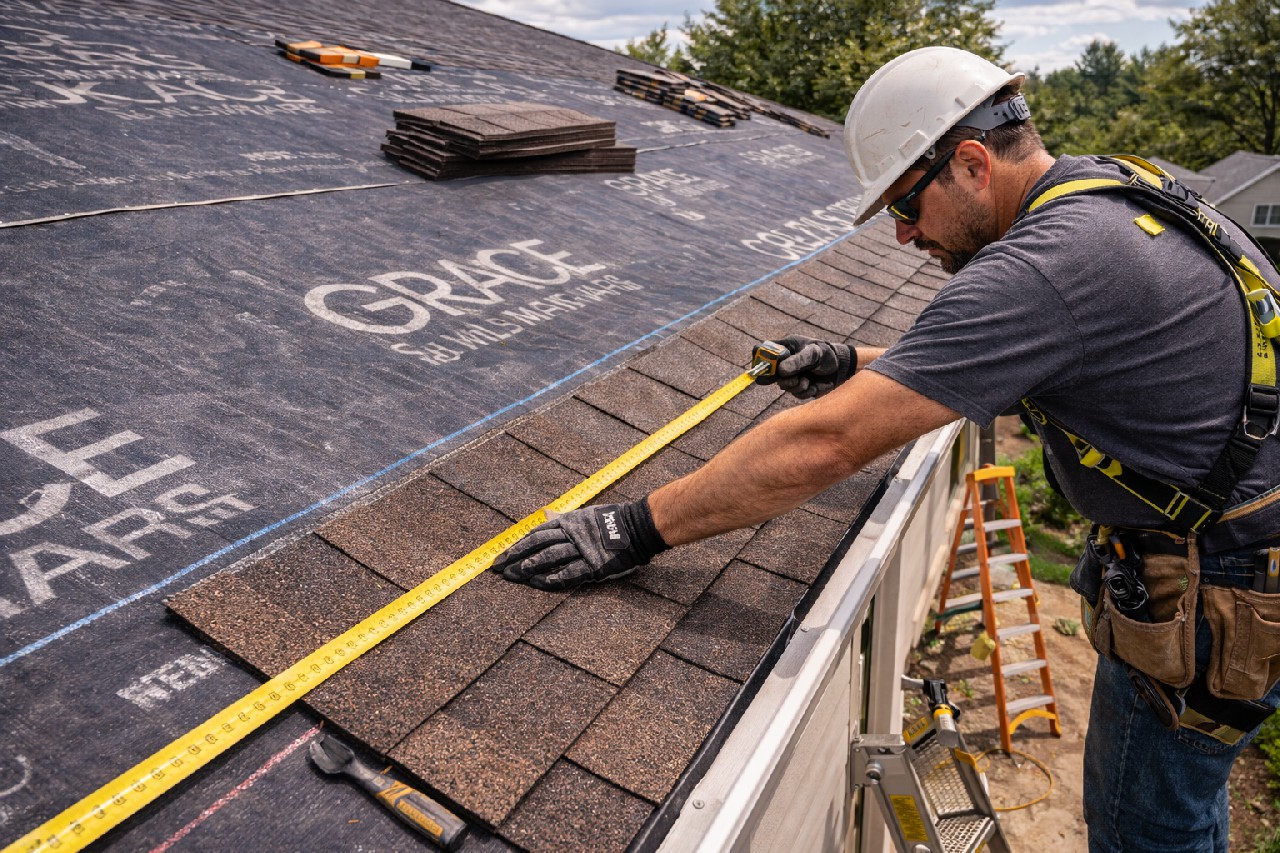
Jersey City sits right in the path of brutal Hudson County winds. Gusts topping 70 mph rip standard shingles off roofs like paper. Pick asphalt shingles rated for at least 110 mph winds to stand up to these beasts.
Look for shingles with a Class F or higher wind rating from UL. These bad boys come sealed with extra-strong adhesives. They lock down tight, even when storms howl off the Hudson River.
- Check the warranty: 110-130 mph coverage means real protection.
- Skip cheap 60 mph junk; it fails fast in our winds.
- Bonus: Impact-rated shingles (Class 4) shrug off hail too.
Your roofer should prove the rating with product specs. Demand asphalt shingle samples you can feel. This choice alone slashes blow-off risks by 80% in high-wind zones like ours.
Tip #2: Vet Jersey City Roofers for Asphalt Shingle Expertise
Your roof lasts only as long as the hands that install it. Pick a hack, and those fancy asphalt shingles peel off in the next nor'easter. Smart homeowners dig deep before signing.
Red Flags to Dodge
- No local Jersey City references? Run. Pros here battle Hudson winds daily.
- Quotes too low? They're skimping on nails or underlayment to hit your wallet.
- Can't show GAF or CertainTeed certifications? Asphalt mastery demands proof.
Call three outfits. Grill them on impact-resistant shingle installs from past storms. The one who pulls photos and talks specifics? That's your guy. Save thousands by spotting fakes upfront.
Tip #3: Prepare Your Roof Deck for Flawless Asphalt Shingle Installation
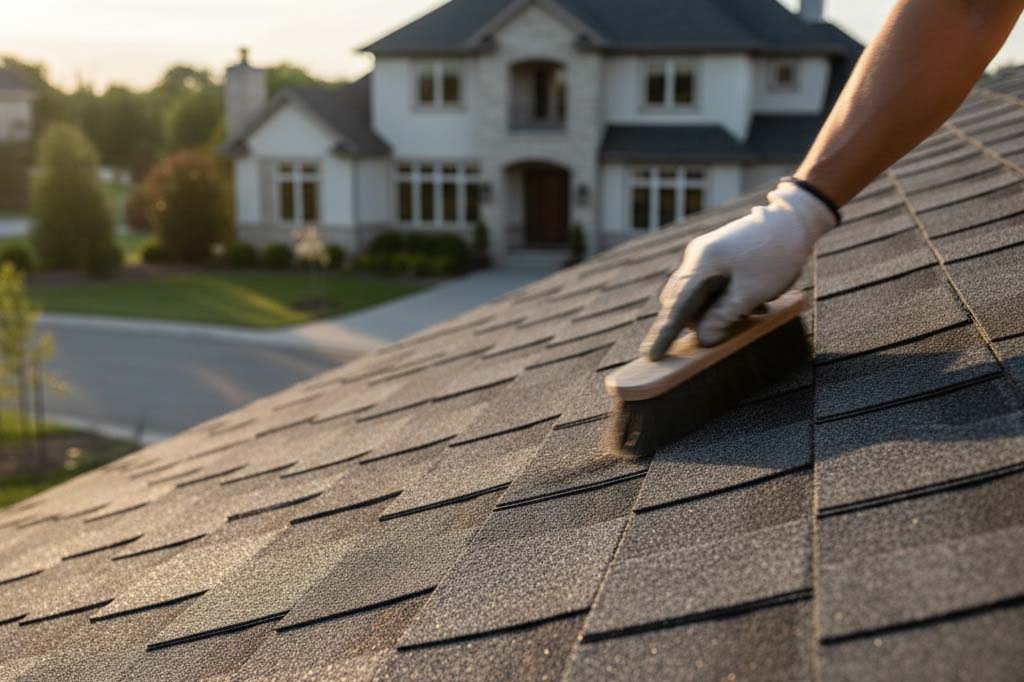
Your roof deck is the unsung hero under those asphalt shingles. Skip this step, and your new roof fails fast. Jersey City humidity and storms demand a solid base.
Start with a full inspection. Probe every board for rot or soft spots. One weak plywood sheet can doom the whole job.
Key Deck Prep Checklist
- Replace any damaged or warped OSB/plywood with 5/8-inch minimum thickness rated for roofs.
- Check for proper spacing: 1/8-inch gaps between sheets to let it breathe and move.
- Secure loose boards with 8d nails or screws every 6 inches on edges, 12 inches in the field.
- Sweep off debris. No nails, leaves, or old granules left behind.
Insist your roofer strips everything down to bare deck. Ice and water shield goes over seams next. This setup stops leaks cold in Hudson County downpours.
Tip #4: Install Premium Underlayment and Flashing to Beat Leaks
Leaks don't start with shingles. They sneak in through weak spots below, where cheap materials fail fast in Jersey City's wet winds.
Skip the basic felt paper. Demand premium synthetic underlayment like titanium or rubberized asphalt sheets. It seals cracks, slides off ice dams, and laughs at standing water.
Why Underlayment Saves Your Bacon
- Blocks moisture 10 times better than old-school tar paper.
- Grips nails tight, no blow-offs in 80 mph gusts.
- Warranties up to 40 years if your roofer installs it right.
Flashing is your roof's armor at edges, valleys, and chimneys. Use heavy-gauge aluminum or copper, not flimsy plastic that rusts and peels.
Pro trick: Double-layer it around penetrations. One wrong seam, and you're mopping floors after every nor'easter. Get this right, and leaks become ancient history.
Tip #5: Master Nailing Patterns and Ventilation in High-Wind Zones
Jersey City winds don't mess around. They slam shingles at 60+ mph during nor'easters. Get nailing wrong, and your roof turns into a sail ripping off in the next gale.
Clip the Nails Right
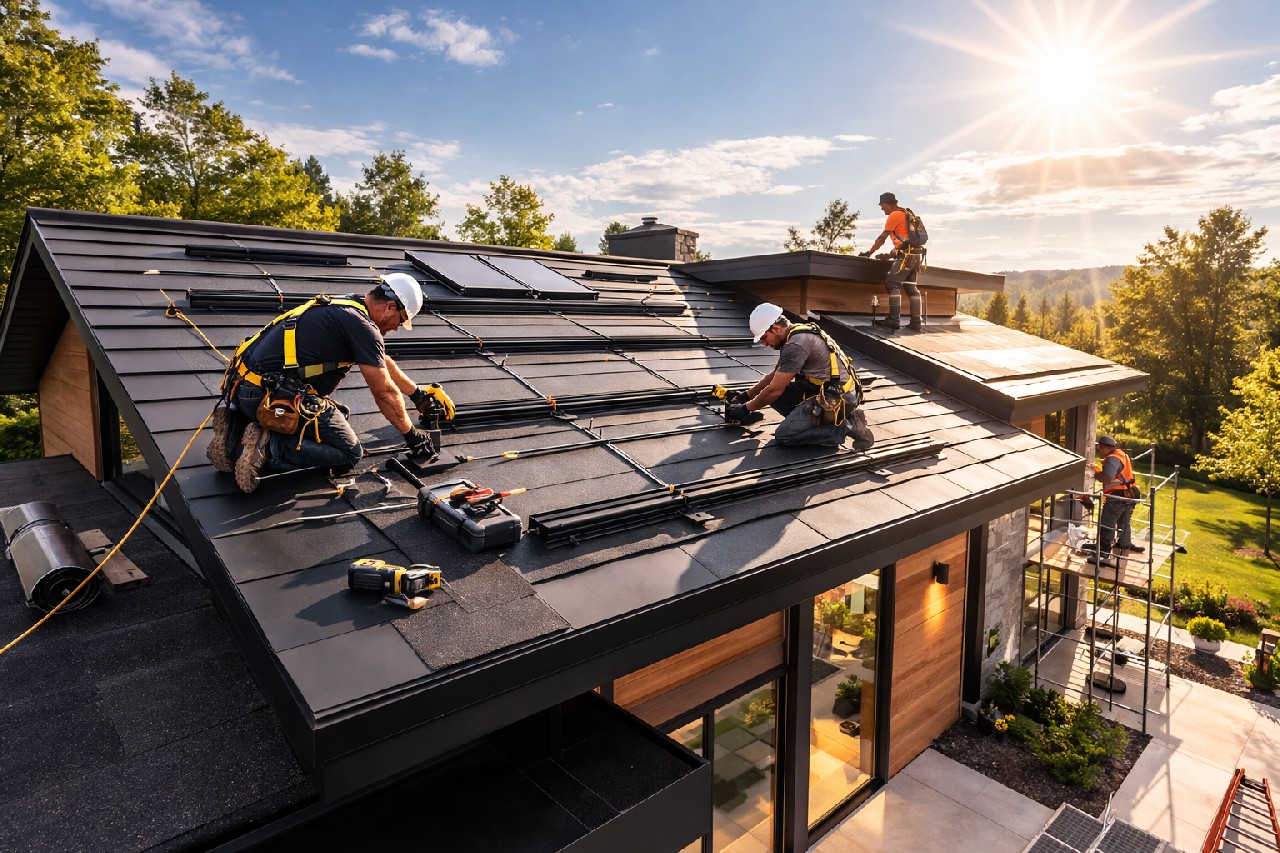
Skip the six-nail myth for standard jobs. Use four to six nails per shingle, driven 1 inch above the sealant strip. In high-wind spots like eaves or rakes, go six and clip them 1/8 inch above the shingle for a bombproof hold.
- Drive nails straight, not angled. Crooked ones pop loose fast.
- Space them 1-2 inches apart across the top edge.
- Test by hand: no wobble means victory.
Ventilation keeps your attic cool and dry, fighting ice dams that plague Hudson winters. Poor airflow traps heat, melts snow, then refreezes into leaks. Aim for one square foot of vent per 150 square feet of attic space, split between soffit and ridge vents.
Pro move: Install a high-performance ridge vent with your shingles. It sucks out hot air like a chimney, slashing moisture risks by half. Your roof lasts longer, your energy bills drop.
Jersey City Case Study – A Leak-Free Asphalt Shingle Triumph
Picture this: Mike, a longtime Jersey City resident in the Heights neighborhood, watched his dream home turn into a drip factory after last winter's brutal nor'easter. Water stains spread across his ceilings. He called three roofers. All promised the moon but delivered headaches.
The Breaking Point
Mike's old asphalt shingles had peeled off like cheap stickers in 50-mph gusts. His first "pro" skimped on wind-resistant shingles and proper nailing. Leaks hit within weeks.
He almost gave up. Then he dug into local tips. Hired a vetted crew that nailed every step from deck prep to premium underlayment.
Storm-Proof Turnaround
- Tip 1 in action: Switched to Class H wind-rated shingles locked down tight.
- Tip 4 applied: Ice-and-water shield everywhere valleys met.
- Tip 5 executed: Perfect 6-nail pattern plus ridge vents for killer airflow.
Six months later? Zero leaks after back-to-back storms dumped 4 inches of rain. Mike's roof laughs at Hudson County winds now. Energy bills dropped too, thanks to that ventilation boost.
Final Thoughts
Your Jersey City roof deserves better than quick fixes that fail fast. These six tips turn average asphalt shingle jobs into bulletproof shields against storms and leaks.
Skip the DIY disasters. Hire roofers who live these rules daily, and watch your home stay dry for decades.
Quick Action Steps
- Grab a free inspection from a local pro today.
- Check your current shingles for wind damage signs.
- Explore more Asphalt Shingle Roof Installation guides to stay ahead.
One smart move now saves thousands later. Your roof's future starts here.
People Also Ask
What are the best wind-resistant asphalt shingles for Jersey City homes?
Impact-resistant asphalt shingles rated for winds up to 130-150 mph, like those with Class H or GAF's Timberline HDZ, are ideal for Jersey City's stormy weather. These shingles feature reinforced edges and sealant strips that lock them down during high winds. Local homeowners should prioritize UL 2218 Class 4 impact ratings to withstand hail too.
How do I vet roofers for asphalt shingle installation in Jersey City?
Look for Jersey City roofers certified by GAF or Owens Corning with proven asphalt shingle portfolios and at least 10 years of local experience. Check reviews on Google and BBB, verify NJ licensing, and request references from recent Hudson County projects. Avoid low bids without detailed contracts outlining wind-resistant installation standards.
Why is roof deck preparation crucial for asphalt shingle roofs?
A properly prepared roof deck, including straight, dry plywood or OSB with gaps less than 1/8 inch, ensures shingles adhere correctly and prevents buckling. In Jersey City's humid climate, treating for moisture and removing debris avoids premature failures. Professional inspection identifies rot or weak spots before installation.
What underlayment prevents leaks under asphalt shingles in windy areas?
Premium synthetic underlayments like GAF Deck-Armor or self-adhering ice-and-water shields provide superior protection against Jersey City's wind-driven rain. These materials seal around nails and create a watertight barrier, outperforming traditional felt. Install full coverage in valleys and eaves for maximum leak prevention.
How does proper nailing and ventilation affect asphalt shingle longevity?
Using 4-6 nails per shingle in specific high-wind patterns, placed 1-2 inches above the sealant strip, secures them against Jersey City's gusts up to 60 mph. Adequate ridge and soffit ventilation reduces heat buildup, extending shingle life by 10-15 years. Follow IRC codes for spacing to avoid blow-offs and ice dams.

Jersey City Roofing provides roofing services to homeowners and businesses throughout Jersey City, NJ. With years of hands-on experience, the team handles installations, repairs, and maintenance suited to local weather conditions. Rooted in the Jersey City community, Jersey City Roofing emphasizes skilled workmanship and dependable results.
Need Roofing?
Fast roofing repairs and replacements in Jersey City, NJ and nearby areas (07302, 07304, 07305, 07306), delivering weatherproof protection that lasts.
Get Roofing Quote